
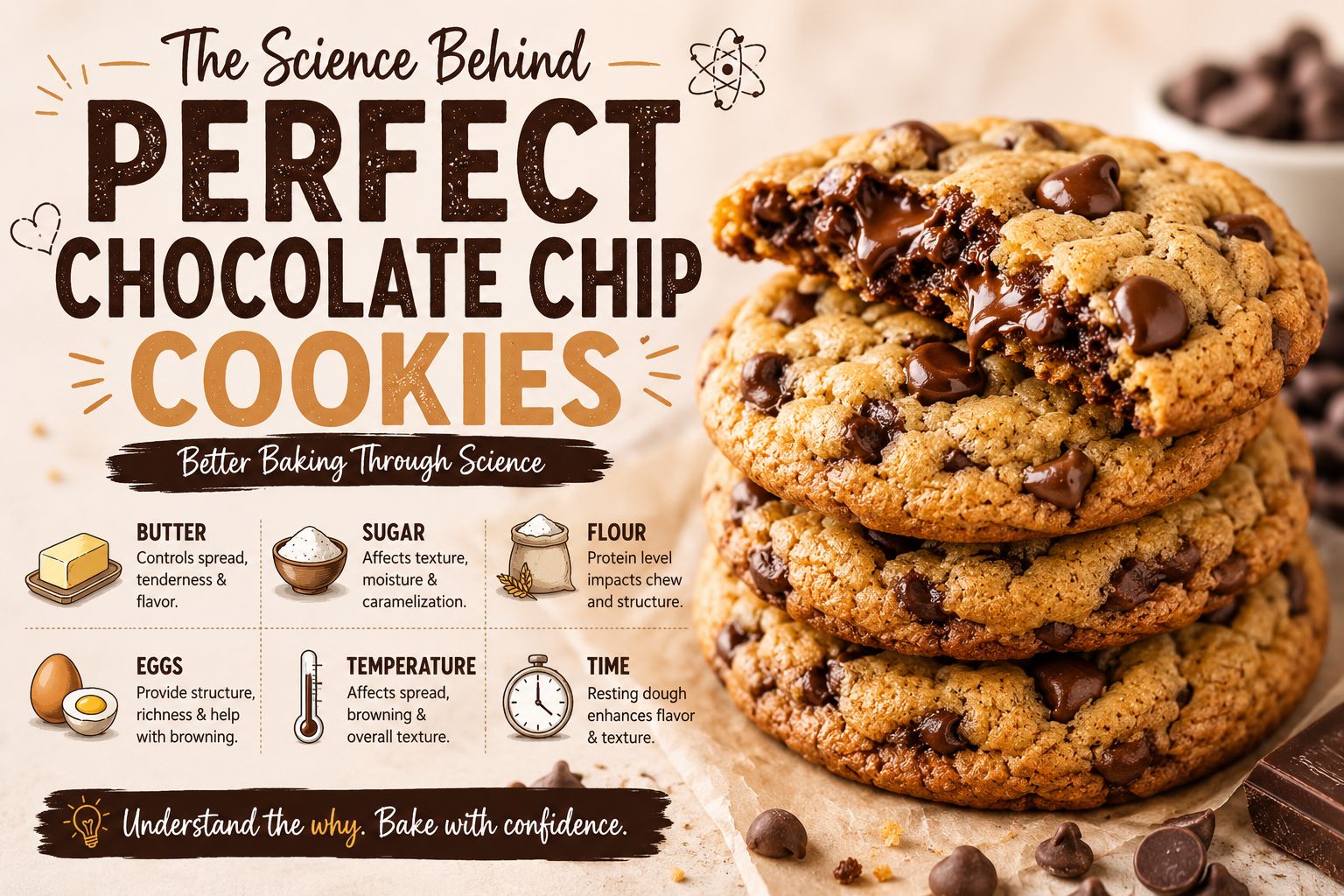
Few things are more frustrating than pulling a tray of chocolate chip cookies from the oven only to discover they spread into greasy puddles, baked into dry hockey pucks, or turned cakey when you wanted chewy centers. I have spent years testing cookie formulas in both restaurant kitchens and home ovens, and I can confidently say that chocolate chip cookies are one of the most misunderstood baked goods in modern baking. Most failures are not caused by “bad recipes.” They happen because bakers do not fully understand the science controlling texture, spread, moisture retention, and caramelization.
A chocolate chip cookie is essentially a controlled chemical reaction. Tiny changes in butter temperature, sugar ratios, flour protein levels, mixing time, or oven heat can completely alter the final result. In professional kitchens, I have watched two batches made from identical ingredients produce dramatically different cookies simply because one dough rested overnight while the other went directly into the oven. That level of sensitivity is exactly why mastering cookie science matters.
By the end of this guide, you will understand how fat behaves during baking, why brown sugar creates chewiness, how gluten development affects texture, why chilling dough changes flavor and spread, and how to troubleshoot nearly every common cookie disaster in real time. Once you understand the mechanics behind the process, you stop relying on luck and start baking intentionally.
The Underlying Science of Chocolate Chip Cookies
At its core, a chocolate chip cookie is a balance between structure builders and tenderizers. Flour and eggs create structure, while butter and sugar weaken that structure to produce softness and spread. The final texture depends on how those opposing forces interact during baking.
Butter is the most influential ingredient in cookie behavior. When butter melts in the oven, it releases water and fat simultaneously. The water turns into steam, which contributes lift, while the fat coats flour proteins and limits gluten formation. Gluten is the elastic protein network formed when flour hydrates and is mixed. More gluten creates chewiness and structure; less gluten produces tenderness. This is why overmixing cookie dough often creates tougher cookies.
The type of sugar used dramatically changes texture because white sugar and brown sugar behave differently under heat. White sugar promotes spreading and crispness because it contains no molasses and melts rapidly. Brown sugar contains molasses, which is hygroscopic, meaning it attracts and retains moisture. In my kitchen tests, increasing brown sugar consistently produces softer, chewier cookies with deeper caramel notes.
Eggs contribute both moisture and protein. Egg whites contain water and proteins that strengthen structure during baking, while yolks contain fat and emulsifiers that add richness and tenderness. Using an extra yolk creates denser, fudgier cookies because the added fat interrupts gluten formation and improves moisture retention.
Temperature controls nearly everything. If cookie dough enters the oven too warm, butter melts before the cookie structure sets, causing excessive spread. Chilled dough slows down that melting process, allowing proteins and starches time to stabilize before the fat fully liquefies. This is one reason bakery-style cookies are often refrigerated for 24 to 72 hours before baking.
Baking soda and baking powder are also commonly misunderstood. Baking soda requires acid to activate and encourages browning because it raises dough pH. Higher pH accelerates the Maillard reaction, the complex browning process responsible for nutty, caramelized flavors. Baking powder contains its own acid and provides a lighter, puffier rise. Most classic chocolate chip cookies rely primarily on baking soda for controlled spread and rich flavor development.
Finally, flour protein content affects texture more than most home bakers realize. Bread flour contains more protein than all-purpose flour, creating stronger gluten networks and chewier cookies. Cake flour contains less protein, producing softer and more delicate textures. Many professional bakers blend flours to precisely engineer cookie texture.
The Best Technique for Consistently Perfect Cookies
The first step toward exceptional cookies starts before mixing even begins. Ingredient temperature matters enormously. I prefer cool room-temperature butter, around 65°F (18°C), rather than overly soft butter. Properly tempered butter traps air efficiently during creaming without becoming greasy. Butter that is too warm creates unstable air pockets, leading to dense cookies that spread unevenly.
Creaming butter and sugar is not simply mixing; it is an aeration process. During creaming, sugar crystals cut into butter and create microscopic air pockets. Those pockets expand in the oven and influence texture. Under-creaming creates dense cookies, while over-creaming incorporates excessive air, leading to puffier cookies that collapse after baking. I generally cream butter and sugars for three to four minutes until the mixture looks lighter but not fluffy like cake batter.
Once eggs are added, mixing should become gentler. Excessive agitation after flour addition develops unnecessary gluten. I stop mixing the moment dry streaks disappear. Professional bakers often finish folding dough by hand specifically to avoid overdevelopment.
One of the most transformative techniques is resting the dough. Freshly mixed dough contains uneven moisture distribution. Over time, flour hydrates more completely, sugars dissolve gradually, and flavor compounds deepen. After a 24-hour rest, cookies bake darker, spread more evenly, and develop richer caramel flavors. In side-by-side tests, rested dough consistently produces superior texture and complexity.
Scooping technique also matters more than most people assume. Uniform dough portions ensure even baking. I prefer large cookie scoops because bigger cookies retain moisture better due to slower heat penetration. Smaller cookies lose water rapidly and can become dry before proper browning develops.
Oven temperature accuracy is another hidden variable. Most home ovens fluctuate by 15 to 25 degrees. An inexpensive oven thermometer can dramatically improve consistency. I typically bake cookies at 350°F (175°C) for balanced spread and caramelization. Higher temperatures create crisp exteriors quickly but can leave centers underdeveloped.
The final secret is understanding carryover baking. Cookies continue cooking after leaving the oven because residual heat remains trapped inside. I remove cookies when the edges are set but centers still appear slightly underdone. As they cool, proteins solidify further and moisture redistributes throughout the cookie.
Comprehensive Troubleshooting Guide
One of the most common problems is excessive spreading. In nearly every case, the butter was too warm, the dough lacked sufficient chilling time, or the flour measurement was inaccurate. Measuring flour by volume instead of weight often leads to under-measured flour, weakening structure. If cookies are already spreading in the oven, placing the dough tray into the refrigerator for 10 minutes before continuing can sometimes slow the issue.
Dry, crumbly cookies usually result from too much flour or overbaking. Flour compacts easily in measuring cups, which is why professional bakers rely on digital scales. Even an additional two tablespoons of flour can noticeably dry out a batch. Overbaking is equally common because cookies appear soft when hot. Many bakers leave them in too long waiting for firmness that naturally develops during cooling.
Cookies that turn cakey instead of chewy typically contain too much air or excessive moisture. Over-creaming butter and sugar introduces excess air bubbles that behave more like cake batter during baking. Using too much baking powder can also create puffiness rather than controlled spread.
Greasy cookies often indicate fat imbalance. This can happen when butter separates because the dough became too warm or because the recipe lacks enough flour or egg protein to stabilize the fat. I have rescued overly greasy dough by chilling it thoroughly and folding in a small amount of additional flour.
Uneven baking frequently comes from overcrowded pans or dark baking sheets. Dark pans absorb more heat and accelerate bottom browning before centers finish cooking. Heavy aluminum sheet pans produce the most even results because they distribute heat more gradually.
Chocolate distribution can even become a problem. Chips sinking or clustering usually means the dough became too warm before baking. Chilled dough holds inclusions in suspension more effectively.
Frequently Asked Questions
Why do bakery cookies taste better after resting overnight?
Resting allows flour to hydrate fully while enzymes slowly break down carbohydrates into simpler sugars. This improves browning and creates deeper caramel flavors. Moisture distribution also becomes more uniform, producing more balanced texture throughout the cookie.
Does melted butter make cookies better than softened butter?
Neither is universally “better.” Melted butter creates denser and chewier cookies because it reduces trapped air during mixing. Softened butter produces slightly lighter textures with more structure. The ideal choice depends entirely on the final texture you want.
Why do cookies become hard the next day?
Moisture migration is usually responsible. Water inside the cookie redistributes and evaporates over time. Recipes with more brown sugar generally stay soft longer because molasses retains moisture efficiently. Storing cookies in airtight containers with a slice of bread can slow moisture loss.
Should cookie dough always be chilled before baking?
For most recipes, yes. Chilling solidifies butter, hydrates flour, and improves flavor development. Even a short 30-minute chill noticeably improves spread control. Longer rests of 24 to 48 hours often create the most complex flavor and ideal texture.
Why do chocolate chip cookies sometimes look raw in the center?
Perfectly baked cookies often appear slightly underdone in the middle when removed from the oven. Residual heat continues cooking the center during cooling. Pulling cookies only after the center looks fully baked usually results in dry texture once cooled.
For more authentic articles tastivohub.com