
Let me be honest with you: I didn’t always love cabbage. For years, it was that sad, wedge-shaped thing next to the coleslaw at cookouts or the limp, overcooked mess on hospital cafeteria trays. But then I discovered how to actually cook it.
Cabbage is one of those ingredients that looks boring but delivers big when you treat it right. It’s cheap, lasts forever in your fridge, and can transform into something buttery, sweet, crispy, or even tangy depending on what you do with it.
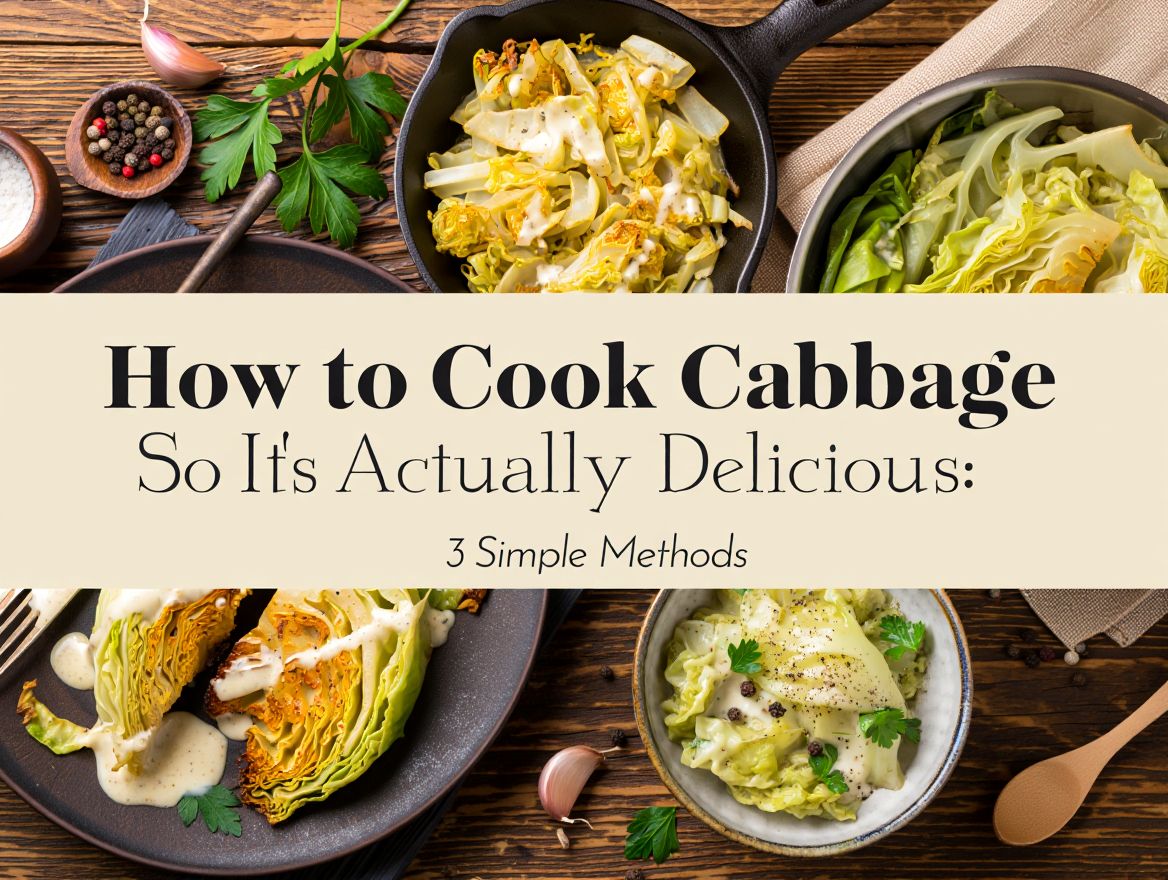
This article is for anyone who’s bought a head of cabbage with good intentions, only to watch it slowly wither in the crisper drawer. I’m sharing three foolproof methods: Roasted Cabbage Wedges, Quick Stir-Fried Cabbage, and a Braised Cabbage that turns silky and almost sweet. Each takes under 30 minutes (except the braise, which needs 45 but is mostly hands-off).
No fancy chef credentials here just a home cook who’s burned, under-seasoned, and finally figured out what works.
Table of Contents
Why This Recipe Works
Most people default to boiling cabbage, which releases sulfur compounds and fills your kitchen with that unpleasant “fart smell.” Not good.
The science is simple: Cabbage holds a lot of water. High heat (roasting or stir-frying) evaporates that water quickly, concentrating natural sugars and creating browning (the Maillard reaction). Low, slow heat with fat (braising) breaks down cell walls gradually, turning the texture silky without the stink.
Each method here uses a different principle:
- Roasting = high heat, minimal fat, maximum caramelization
- Stir-frying = high heat, quick cook, crisp-tender texture
- Braising = low heat, fatty liquid, melt-in-your-mouth softness
The common thread? Salt and fat. Cabbage needs both to shine. Without enough salt, it tastes like wet cardboard. Without fat, the flavors stay flat and vegetal.
Ingredients
For Roasted Cabbage Wedges (serves 4 as a side)
- 1 small head green cabbage (about 2 pounds) – Green holds up better than red for roasting; red turns muddy brown.
- 3 tablespoons olive oil – Helps browning and carries flavor. Don’t use extra-virgin here; the heat degrades the delicate notes anyway.
- 1 teaspoon kosher salt – Diamond Crystal preferred; use half as much table salt.
- ½ teaspoon black pepper – Freshly ground.
- Optional: 2 cloves garlic (thinly sliced), red pepper flakes, lemon wedges for serving.
For Stir-Fried Cabbage (serves 2 as a main or 4 as a side)
- ½ medium head green or savoy cabbage – Savoy is sweeter and more tender, great for quick cooking.
- 2 tablespoons neutral oil (avocado, grapeseed, or vegetable) – Higher smoke point than olive oil.
- 2 cloves garlic, minced
- 1 tablespoon soy sauce (or tamari for gluten-free)
- 1 teaspoon sesame oil – Adds nuttiness; add at the end so the flavor doesn’t burn.
- Pinch of sugar – Balances bitterness.
For Braised Cabbage (serves 4)
- 1 medium head green or red cabbage – Red cabbage holds its color better with a splash of vinegar.
- 2 tablespoons butter – Unsalted so you control the salt.
- 1 medium onion, sliced – Adds sweetness.
- 1 cup broth (vegetable or chicken) – Low-sodium preferred.
- 1 tablespoon apple cider vinegar – Brightens and preserves color (for red cabbage).
- Salt and pepper to taste
Equipment
- Large rimmed baking sheet
- Parchment paper (for easier cleanup on roasted wedges)
- Chef’s knife (sharp dull knives crush cabbage instead of slicing cleanly)
- Large skillet or wok (for stir-fry)
- Dutch oven or heavy pot with lid (for braising)
- Cutting board
- Spatula or tongs
Step-by-Step Instructions
Method 1: Roasted Cabbage Wedges
Prep time: 10 minutes | Cook time: 20–25 minutes
- Preheat your oven to 425°F (220°C). Place a rack in the middle position. Line a baking sheet with parchment paper.
- Remove the outer leaves from the cabbage (discard any that are wilted or damaged). Cut the cabbage in half through the core, then cut each half into 1-inch thick wedges, keeping the core intact so the wedges hold together. You should get 6–8 wedges from a small head.
- Arrange wedges on the baking sheet with space between them crowding creates steam instead of browning. Drizzle with olive oil, then sprinkle salt, pepper, and optional garlic slices or red pepper flakes.
- Roast for 15 minutes without moving them. You want the bottom edges to turn deep golden brown. Then flip each wedge carefully with a spatula. The leaves will have softened and some edges will look crispy.
- Roast another 10–15 minutes. They’re done when the edges are dark brown and crisp, the interior is tender when pierced with a knife, and the sweet smell of caramelized cabbage fills your kitchen (no sulfur smell if you’re doing it right).
- Serve immediately with a squeeze of lemon. The wedges lose crispness as they sit.
Method 2: Quick Stir-Fried Cabbage
Prep time: 10 minutes | Cook time: 5–7 minutes
- Thinly slice the cabbage across the grain into ¼-inch ribbons. Don’t worry about the core—just slice around it or remove it. A ½ medium head will yield about 4 cups loosely packed.
- Heat your largest skillet or wok over high heat until a drop of water sizzles and evaporates instantly. Add the neutral oil and swirl to coat.
- Add the sliced cabbage all at once. It will look like too much, but it wilts fast. Stir-fry vigorously for 1 minute without adding anything else. You want some char spots on a few leaves.
- Add the minced garlic and stir for 30 seconds until fragrant. The smell should be toasty, not burnt.
- Add soy sauce and sugar, toss to coat. Cook 1 more minute. The cabbage should be wilted but still have a bright green color and a noticeable crunch when you bite a thick piece.
- Remove from heat, drizzle sesame oil, and serve immediately. This does not reheat well—the texture turns mushy.
Method 3: Braised Cabbage
Prep time: 10 minutes | Cook time: 40–45 minutes
- Cut the cabbage into 1½-inch wedges or rough 2-inch chunks. For red cabbage, slice thinly instead—it braises faster that way.
- Melt butter in a Dutch oven over medium heat. Add sliced onion and cook 5 minutes until soft and translucent, not browned.
- Add cabbage pieces in a single layer as much as possible. It’s fine if they overlap slightly. Season with salt and pepper.
- Pour in broth (it should come about halfway up the cabbage, not cover it completely) and vinegar if using. Bring to a simmer, then reduce heat to low, cover, and cook for 30 minutes.
- Uncover and check. The liquid should have reduced by about half. The cabbage will be very soft—a fork slides in with no resistance. The color will be deep and the smell rich and almost sweet.
- Turn heat to medium-high, uncovered, for 5 more minutes to thicken the liquid into a sauce. Taste and adjust salt. Serve warm, spooning the buttery broth over the cabbage.
Pro Tips
- Slice cabbage just before cooking. Once cut, it starts oxidizing and losing vitamin C. For roasting, cut wedges right before they go into the oven.
- Don’t skip the browning step in braising. If you add liquid immediately, you miss the deep flavor that comes from sautéing the onions and getting a sear on the first side of the cabbage.
- Save the core for stock. The tough white core is perfect for simmering into vegetable broth. Freeze leftover cores in a bag with onion ends and carrot peels.
- Add a pinch of baking soda if you want super-soft cabbage quickly (for soups). It breaks down pectin faster, but it also destroys texture and creates a soapy taste if you use too much. Stick to ⅛ teaspoon per head.
Common Mistakes to Avoid
- Overcrowding the pan when stir-frying. This drops the temperature instantly, and you’ll steam the cabbage instead of searing it. Work in batches if needed.
- Skipping the salt until the end. Cabbage needs salt early to draw out moisture. For roasted wedges, salt before roasting. For stir-fry, salt (via soy sauce) goes in while cooking, not after.
- Using cold cabbage straight from the fridge for roasting. Cold vegetable + hot oven = uneven cooking. Let cut wedges sit at room temperature for 10 minutes before roasting.
- Throwing away the outer leaves unnecessarily. The dark green outer leaves are tougher but great for braising or adding to soups. Just wash them well.
- Overcooking stir-fried cabbage “to be safe.” If you’re nervous about undercooked vegetables, remember: cabbage is perfectly safe to eat raw in coleslaw. A little crunch is desirable.
Variations
High-Protein Version: Add 8 oz of crumbled firm tofu (pressed) or cooked chicken breast to the stir-fried cabbage during the last minute of cooking. For braised cabbage, stir in 1 cup of cooked white beans and simmer 5 more minutes.
Vegan Option: Substitute butter with coconut oil or a vegan butter alternative. In braised cabbage, coconut oil adds a subtle sweetness that pairs beautifully. Skip any fish-based sauces (obviously).
Spicy Asian Twist: To the stir-fry recipe, add 1 tablespoon gochujang (Korean chili paste) along with the soy sauce, plus ½ teaspoon grated ginger. Garnish with sesame seeds and sliced green onions.
German-Style Braised: Use red cabbage, replace apple cider vinegar with red wine vinegar, add 1 grated apple and 1 tablespoon brown sugar. Braise with beef broth instead of vegetable. Serve alongside sausages or pork chops.
Smoky Roasted: Toss cabbage wedges with smoked paprika, cumin, and a drizzle of maple syrup before roasting. The combination of smoke and sweet is unexpected and delicious.
Storage & Meal Prep
Roasted wedges are best fresh, but leftovers keep in an airtight container in the fridge for up to 3 days. Reheat in a 375°F oven for 5–7 minutes to recrisp the edges. Microwave makes them soggy.
Stir-fried cabbage does not store well it becomes limp and watery within 12 hours. Make only what you’ll eat immediately.
Braised cabbage improves overnight in the fridge (flavors meld). Store in its liquid for up to 5 days. Reheat gently on the stovetop over low heat, adding a splash of water or broth if it’s dried out.
Meal prep tip: Wash and dry a whole head of cabbage, then slice it thinly (or cut wedges). Store in a sealed container with a paper towel to absorb moisture. It stays crisp for 4–5 days, ready for quick stir-fries.
Nutrition Benefits
Cabbage is a cruciferous vegetable (same family as broccoli and kale). A 1-cup serving (cooked) has about 35 calories, 2 grams of fiber, and more than half your daily vitamin C needs. It’s also a solid source of vitamin K (bone health) and contains glucosinolates compounds studied for their anti-inflammatory properties.
The stir-fry and roasted methods preserve more nutrients than boiling, which leaches water-soluble vitamins into the cooking water. Braising loses some vitamin C (heat-sensitive) but makes fiber more digestible for some people.
No miracle cures or medical claims here just a genuinely healthy vegetable that fills you up without filling out your waistline.
FAQ
Why does my cabbage smell like rotten eggs when I cook it?
That’s sulfur being released. It happens most with overcooking, especially boiling. To prevent it: cook cabbage quickly over high heat (roast or stir-fry), or braise with the lid off for the last few minutes so the gases escape. Adding a splash of vinegar or lemon juice also neutralizes the smell.
Can I use red cabbage instead of green in these recipes?
Yes, with caveats. Red cabbage works beautifully in the braised recipe (add vinegar to keep the color vibrant). For roasting, red cabbage wedges are fine but turn purplish-brown not pretty but tastes good. For stir-fry, red cabbage is crunchier and takes 1–2 minutes longer to soften.
How do I cut cabbage without it rolling around?
First, cut the cabbage in half through the core. Place the flat cut-side down on your cutting board. Then slice or wedge with the core facing you. The flat surface gives stability. For shredding, cut each half into quarters and remove the core with a V-shaped cut.
Is the core edible?
Yes, but it’s tough and bitter raw. Thinly slice the core and add it to stir-fries (it cooks tender) or throw whole cores into soup broth for extra flavor. For roasted wedges, leave the core attached so the leaves stay together you can eat around it or eat it whole after roasting (it becomes soft and sweet).
Can I freeze cooked cabbage recipes?
Braised cabbage freezes well for up to 3 months. Thaw overnight in the fridge and reheat on the stovetop. Roasted and stir-fried cabbage turn to mush after freezing the water expands and destroys the cell structure. Stick to braised or raw shredded cabbage (blanch it first for 2 minutes, then freeze) for future soups.
Conclusion
Cabbage doesn’t have to be boring. With a hot oven, a sizzling skillet, or a slow simmer, you can turn a $2 head of cabbage into the star of your meal. The roasted wedges are my personal favorite crispy edges, sweet center, and dead simple.
Try one method tonight. Then try another next week. You’ll start seeing cabbage differently. And if you mess up? It costs less than a coffee. No pressure.
Now go preheat your oven.
- Easy Cabbage Soup with Smoked Paprika – A cozy, one-pot meal using the same braising principles but with added tomatoes and beans.
- The Best Spicy Beef & Rice Bowl For Weeknight Dinners– A no-cook cabbage recipe perfect for summer, using raw shredded cabbage and carrots.
- Fermented Foods & Bold Tangy Flavors– Take cabbage preservation to the next level with lacto-fermentation (requires a separate, detailed guide).