
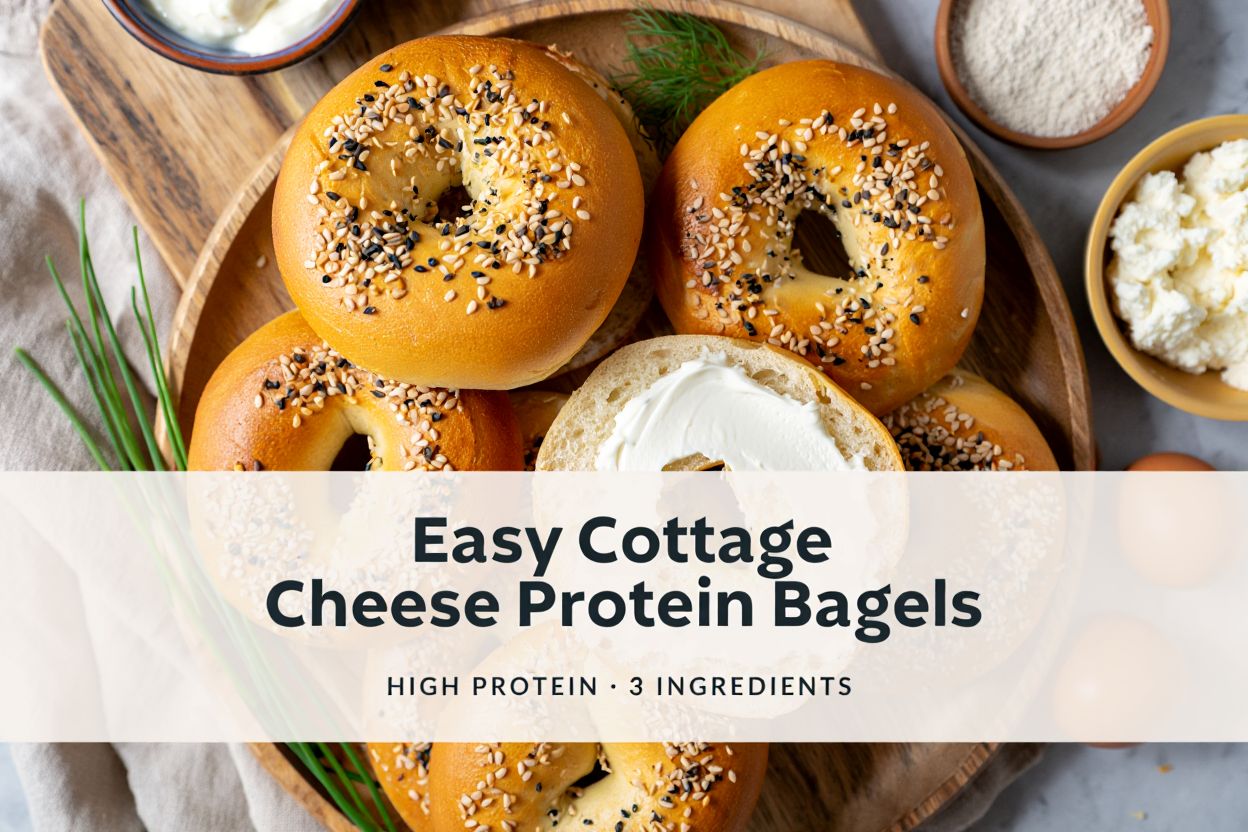
There are mornings when you want something that feels like a real bakery treat warm, chewy, slightly golden on top but you also want to hit your protein goals without cracking open another protein shake. Enter these cottage cheese protein bagels.
They’re soft, satisfying, and come together with just three main ingredients. No hours of rising. No complicated shaping techniques. And honestly? They don’t taste like “diet food.”
This recipe is for anyone who’s tired of dry, cardboard-like protein breads. It’s for busy people who still care about what they eat, for parents trying to sneak more protein into picky eaters, and for anyone who just wants a bagel that actually works for their body.
Let’s get baking.
Why This Recipe Works
Here’s the simple food science: cottage cheese is naturally high in protein and moisture. When you blend it until smooth, it acts like a wet binder for the flour. The self-rising flour already has baking powder and salt mixed in, so you don’t need to measure leaveners separately.
When these bagels bake, the moisture from the cottage cheese turns to steam, which helps them puff up without yeast. The protein from the cheese and eggs (if you add one more on that later) creates structure, so the bagels stay chewy, not crumbly.
You also skip the boiling step that traditional bagels require. No giant pot of water, no slotted spoon. Just mix, shape, and bake.
The result? A bagel that’s dense enough to feel substantial but not heavy. The inside is tender, the outside gets a light crust, and the flavor is subtly tangy from the cottage cheese similar to a sourdough-lite.
Ingredients
Here’s what you’ll need. This makes 4 medium bagels.
- 1 cup (about 225g) full-fat cottage cheese
Full-fat gives better flavor and moisture. Low-fat works, but the bagels will be slightly drier. Blend it smooth for best texture (lumpy cottage cheese makes lumpy bagels). - 1 ¼ cups (156g) self-rising flour
Do not substitute all-purpose flour unless you add 1 ½ teaspoons baking powder and ¼ teaspoon salt per cup of flour. Self-rising is the lazy-but-smart shortcut here. - 2 large eggs (optional but recommended)
One egg binds everything and adds protein. Two eggs make the bagels more bread-like. Without eggs, the dough is stickier and bagels turn out denser. - Optional topping: Everything bagel seasoning, sesame seeds, poppy seeds, or flaky salt.
That’s it. No sugar, no oil, no butter unless you want it on the finished bagel.
Equipment
- Blender or food processor (to smooth the cottage cheese)
- Large mixing bowl
- Rubber spatula
- Baking sheet
- Parchment paper
- Your hands (lightly floured)
Step-by-Step Instructions
1. Preheat your oven and prep your pan
Set your oven to 375°F (190°C). Line a baking sheet with parchment paper. No need to grease it.
2. Smooth the cottage cheese
This is the most important step. Scoop the cottage cheese into a blender or small food processor. Blend for 20–30 seconds until completely smooth. You shouldn’t see any white curds. It’ll look like thick yogurt or sour cream.
Visual cue: The texture should be glossy and pourable but still thick.
If you skip this step, your bagels will have weird, wet cheese pockets. Not great.
3. Mix the dough
Pour the smooth cottage cheese into a mixing bowl. Add the self-rising flour. Crack in your eggs (if using). Stir with a rubber spatula until a shaggy dough forms. It will look sticky—that’s normal.
Texture cue: The dough should pull away from the sides of the bowl slightly but still feel tacky.
4. Bring it together with your hands
Lightly flour your hands (not the dough). Gather the dough into a ball right in the bowl. Knead gently for about 30 seconds just until it feels uniform. Over-kneading will make bagels tough.
Time cue: 30 seconds max. Stop when you no longer see dry flour patches.
5. Divide and shape
Transfer the dough to a lightly floured surface. Cut it into 4 equal pieces. Roll each piece into a smooth ball, then poke your thumb through the center. Gently stretch the hole to about 1 inch wide. Don’t worry about perfect circles rustic is fine.
Visual cue: The hole should be visible and open. It will shrink slightly as it bakes.
6. Add toppings
Place bagels on the parchment-lined sheet. If adding seasoning, brush the tops lightly with water or an egg wash (1 egg beaten with a tablespoon of water). Sprinkle generously.
7. Bake
Bake for 22–25 minutes. At 20 minutes, check them. The bagels should be golden brown on top and firm when you tap them.
Sensory cue: Your kitchen will smell nutty and slightly cheesy, like fresh bread with a hint of tang.
8. Cool slightly before eating
Let them rest on the baking sheet for 5 minutes, then transfer to a wire rack. If you slice them hot, they’ll squish. I know it’s hard to wait. But wait.
Pro Tips
- Don’t over-flour the dough. If it feels too sticky to shape, flour your hands more, not the dough. Extra flour makes dry, dense bagels.
- Use a kitchen scale if you have one. Measuring flour by volume (cups) varies wildly. 156g of self-rising flour is more reliable than 1 ¼ cups.
- Let the dough rest for 5 minutes after mixing. This lets the flour absorb moisture fully. The dough becomes less sticky without adding more flour.
- For a shinier, darker crust, brush the bagels with an egg wash before baking and again halfway through.
- Blend the cottage cheese ahead of time. You can blend a whole tub and store it in the fridge for up to 3 days. Then these bagels come together in 5 minutes of active work.
Common Mistakes to Avoid
- Using unblended cottage cheese. This is the #1 mistake. Curds create steam pockets that burst, leaving you with cratered, wet bagels.
- Skipping the eggs. Without eggs, the dough is very sticky and the finished bagels are flat and dense. If you’re egg-free, add ¼ cup of Greek yogurt instead.
- Overbaking. These bagels go from perfect to dry in about 2 minutes. Start checking at 20 minutes. They should feel firm but still spring back.
- Shaping holes that are too small. If the hole is a tiny slit, it’ll close up during baking. You’ll end up with bagel-shaped rolls instead of true bagels.
- Using all-purpose flour without adjustments. This will produce flat, salty discs. If you substitute, add baking powder and salt.
Variations
1. Everything Bagel Bombs
Add ½ teaspoon garlic powder and ½ teaspoon onion powder to the dry flour before mixing. Top with everything bagel seasoning. The extra flavor sinks into the dough itself.
2. Cinnamon Raisin Protein Bagels
Skip the savory toppings. Add 1 teaspoon cinnamon and ¼ cup raisins to the dough. After shaping, sprinkle with a tiny bit of cinnamon sugar. Great with cream cheese.
3. Vegan (No Eggs, No Dairy)
Use plant-based cottage cheese (some brands make it, or blend firm tofu with lemon juice and salt). Replace eggs with ¼ cup unsweetened applesauce plus 1 tablespoon ground flaxseed mixed with 3 tablespoons water. Texture will be softer, but still good.
4. Spicy Jalapeño Cheddar
Add ¼ cup shredded sharp cheddar and 1 diced pickled jalapeño to the dough. The cheese melts into salty pockets. Top with more cheddar before baking.
Storage & Meal Prep
Fridge: Store baked bagels in an airtight container for up to 5 days. They dry out faster than regular bagels, so wrap them tightly.
Freezer: Wrap each bagel individually in plastic wrap, then place in a freezer bag. Freeze for up to 2 months.
Reheat: From frozen or fridge, slice first, then toast. Toasting brings back the chewy texture. Avoid microwaving they turn rubbery.
Meal prep tip: Mix the dry ingredients (self-rising flour + any spices) in a jar. Blend cottage cheese and store it separately. In the morning, just combine, shape, and bake.
Nutrition Benefits (Per Bagel, Approximate)
Using full-fat cottage cheese and one egg:
- Calories: ~220
- Protein: 15–18g
- Carbs: ~24g
- Fat: ~7g
These bagels deliver more protein than a standard bagel (which averages 8–10g) with less refined carbohydrates. Cottage cheese provides casein protein, which digests slowly and keeps you full longer. You’re also getting calcium and B vitamins.
Disclaimer: I’m a food blogger, not a doctor or nutritionist. These numbers are estimates. Talk to a professional for medical or dietary advice.
FAQ
Can I make these gluten-free?
Yes. Use a gluten-free self-rising flour blend that contains xanthan gum. King Arthur’s and Bob’s Red Mill both work. The dough will be stickier, so wet your hands instead of flouring them.
Why are my bagels gummy inside?
Two likely reasons: (1) you underbaked them, or (2) you cut them open while still hot. Steam needs to escape. Let them cool for at least 10 minutes.
Can I use fat-free cottage cheese?
You can, but the bagels will be drier and less flavorful. If you go fat-free, add 1 tablespoon of olive oil or melted butter to the dough to compensate.
How do I get a chewier bagel texture?
Replace ¼ cup of the self-rising flour with vital wheat gluten. This boosts protein and creates that classic bagel chew. You’ll also need to knead the dough for 1 full minute instead of 30 seconds.
Do I have to blend the cottage cheese if I use small-curd?
Yes. Even small curds leave lumps. Blending is non-negotiable for smooth bagels.
Conclusion
These easy cottage cheese protein bagels have quietly become one of those recipes I make on repeat not because they’re “healthy,” but because they’re genuinely good. They toast beautifully. They hold up to a thick smear of cream cheese or a smear of peanut butter. And they solve the real problem of wanting a bagel without the mid-morning carb crash.
Give them a try on a Sunday afternoon. Make a double batch. Freeze half. And then thank yourself on Tuesday morning when breakfast takes 90 seconds in the toaster.
Internal Linking Suggestions
If you’re looking for more high-protein, low-effort recipes, you might also enjoy:
- 3-Japanese Yogurt Cheesecake (no yeast, ready in 15 minutes)
- High-Protein Peanut Butter Blender Muffins (gluten-free option included)
- Savory Beef and Creamy Cottage Cheese (creamy, 20g protein per serving)