
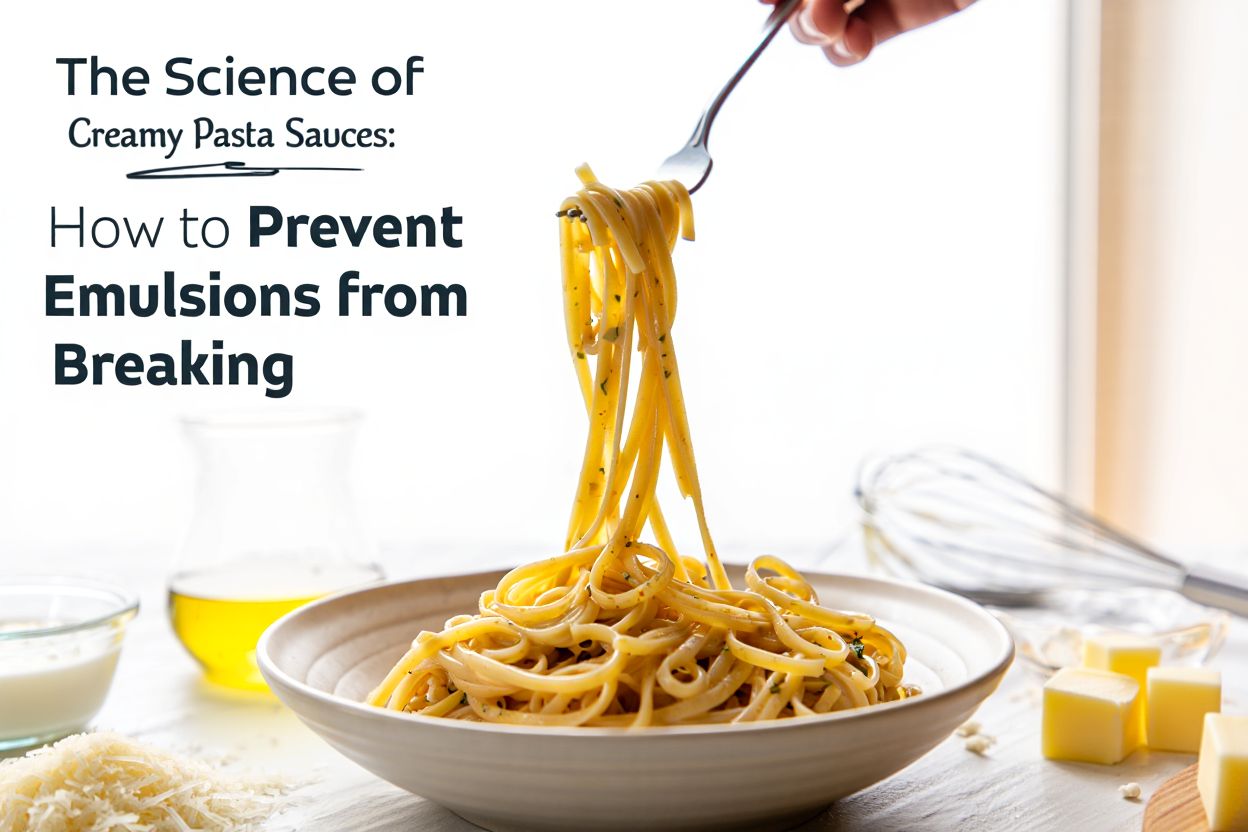
Why Your Perfect Pasta Sauce Suddenly Turns Oily
Few kitchen disappointments are as frustrating as spending time crafting a rich, silky pasta sauce only to watch it separate into a greasy puddle moments before serving. One minute the sauce looks smooth and luxurious, coating every strand of pasta beautifully. The next, pools of oil float on the surface while watery liquid gathers at the bottom of the pan. I’ve encountered this problem countless times throughout my years in professional and home kitchens, and it remains one of the most misunderstood cooking failures among home cooks.
Many people assume creamy sauces break because of bad ingredients or poor recipes. In reality, the problem almost always comes down to understanding the science of emulsions and how ingredients interact under heat. Once you understand the mechanisms that keep fats and liquids suspended together, preventing sauce separation becomes remarkably predictable.
By the end of this guide, you’ll understand exactly what an emulsion is, why creamy pasta sauces break, how temperature affects stability, and the precise techniques professional cooks use to create restaurant-quality sauces that remain smooth from the stove to the dinner table.
The Underlying Science Behind Stable Pasta Sauces
At its core, a creamy pasta sauce is an emulsion. An emulsion occurs when two substances that naturally resist mixing “typically fat and water”are forced into a stable combination. Cream, butter, cheese, and olive oil all contain fats, while stock, pasta water, milk, and cream contain significant amounts of water.
Under normal circumstances, fat molecules prefer to stick together while water molecules do the same. This is why oil and water separate when shaken together and left to rest. A successful pasta sauce depends on preventing this natural separation.
The secret lies in emulsifiers and stabilizers. An emulsifier is a compound that helps fat and water coexist. Cheese proteins, milk proteins, egg yolks, and certain starches all possess emulsifying properties. These compounds act as intermediaries, helping water and fat remain evenly distributed throughout the sauce.
Temperature plays an equally important role. Proteins in dairy products exist within a narrow stability range. When exposed to excessive heat, proteins begin to tighten and coagulate. Instead of helping bind the sauce together, they squeeze out moisture and fat, causing separation. This is why a cream sauce that looks perfect at a gentle simmer may suddenly break when brought to a vigorous boil.
Starch contributes another layer of stability. Pasta water contains starch released from the pasta during cooking. These microscopic starch particles absorb water, increase viscosity, and create a network that helps suspend fat droplets. In my kitchen, properly starchy pasta water often makes the difference between a glossy, restaurant-quality sauce and one that feels thin or unstable.
Cheese-based sauces introduce additional complexity. Hard cheeses such as Parmesan contain protein structures that can clump together when heated too aggressively. Instead of dispersing smoothly, they form strings or grainy particles while fat separates from the protein matrix. Understanding this reaction explains why adding cheese at the wrong temperature frequently results in a broken sauce.
The science ultimately comes down to maintaining balance. Stable emulsions require controlled heat, sufficient emulsifiers, proper hydration, and continuous movement to keep microscopic fat droplets suspended throughout the liquid phase.
The Best Technique for Building a Stable Creamy Pasta Sauce
Success begins long before the sauce reaches the pan. Ingredient preparation matters significantly. Grate cheese finely to encourage even melting. Bring dairy ingredients closer to room temperature before cooking whenever possible. Cold ingredients introduced to a hot pan create abrupt temperature fluctuations that can destabilize an emulsion.
Start by building your flavor base over moderate heat. Whether using butter, olive oil, garlic, shallots, or aromatics, avoid excessive temperatures. Browning ingredients too aggressively creates localized hot spots that can later affect sauce stability.
If using cream, add it gradually and maintain a gentle simmer rather than a rolling boil. I generally aim for a temperature where small bubbles occasionally break the surface but vigorous bubbling never occurs. This allows moisture to evaporate slowly while preserving protein integrity.
Reserve at least one cup of pasta water before draining your pasta. This step is often overlooked, yet it provides one of the most effective tools for emulsion management. The dissolved starches create natural thickening and stabilizing effects that cannot be replicated with plain water.
Transfer the cooked pasta directly into the sauce whenever possible. Adding pasta while both components are hot encourages integration. Toss continuously rather than simply pouring sauce over plated pasta. Movement helps distribute fat droplets evenly throughout the liquid.
When incorporating cheese, remove the pan from direct heat or reduce heat to its lowest setting. Add cheese gradually in small handfuls while stirring constantly. Dumping large amounts of cheese into a hot sauce overwhelms the emulsion and encourages clumping.
The final stage involves emulsification through agitation. Professional cooks often finish pasta by tossing vigorously or stirring continuously for one to two minutes. This mechanical action breaks fat into smaller droplets, increasing stability and producing the glossy texture associated with restaurant pasta dishes.
If the sauce appears too thick, add reserved pasta water one tablespoon at a time. If it appears too thin, continue tossing over low heat until the desired consistency develops. The goal is a sauce that clings to pasta rather than pooling beneath it.
Troubleshooting Broken and Unstable Pasta Sauces
One of the most common problems is visible oil separation. This typically occurs when the sauce becomes too hot, causing fats to separate from the liquid phase. If this happens, immediately remove the pan from heat. Add a small amount of warm pasta water and whisk or stir vigorously. In many cases, the emulsion can be rebuilt before the sauce fully collapses.
Grainy cheese sauces usually indicate protein aggregation. Excessive heat causes cheese proteins to tighten and clump together. Lowering the temperature and gradually incorporating warm liquid may help smooth the texture. Prevention remains easier than correction, which is why cheese should always be added gently.
A sauce that appears watery often lacks sufficient starch or reduction. Rather than increasing heat dramatically, continue cooking gently while tossing the pasta. Additional pasta water should be added cautiously because excessive dilution can weaken structure.
Curdled cream sauces generally result from temperature shock or overheating. Once dairy proteins fully curdle, complete recovery becomes difficult. Straining and blending may improve texture, but prevention through temperature control is the better strategy.
Sauces that become excessively thick after sitting are experiencing continued starch absorption and moisture loss. Adding small amounts of warm pasta water while stirring usually restores the original consistency without compromising flavor.
Many cooks attempt to rescue broken sauces by adding more cheese, cream, or butter. This frequently worsens the problem by increasing the fat load without restoring the emulsion structure. Reintroducing water and agitation is often more effective than adding additional fat.
Frequently Asked Questions
Why does my Alfredo sauce become oily after a few minutes?
Alfredo sauce separates when the emulsion loses stability. Excessive heat is usually responsible. Butterfat and cheese fat begin separating from the water phase, creating an oily surface. Maintaining lower temperatures and using reserved pasta water significantly improves stability.
Is pasta water really necessary?
Absolutely. Pasta water contains suspended starch molecules that act as natural stabilizers and thickeners. In professional kitchens, pasta water is often considered one of the most important ingredients in a successful sauce. It helps bind fat and water while creating a glossy finish.
Can I fix a broken cheese sauce?
In many cases, yes. Remove the sauce from heat immediately and add a small amount of warm pasta water. Stir or whisk vigorously to encourage re-emulsification. The sooner you intervene, the greater the chance of recovery.
Why should cheese be added off the heat?
High temperatures cause cheese proteins to contract and separate from their fat content. Adding cheese after reducing or removing heat allows it to melt gradually into the sauce without destabilizing the emulsion. This technique produces a smoother, creamier texture and greatly reduces the risk of graininess.
Don’t forget to try our Marry Me Chicken Pasta
for authentic recipes tastivohub.com