
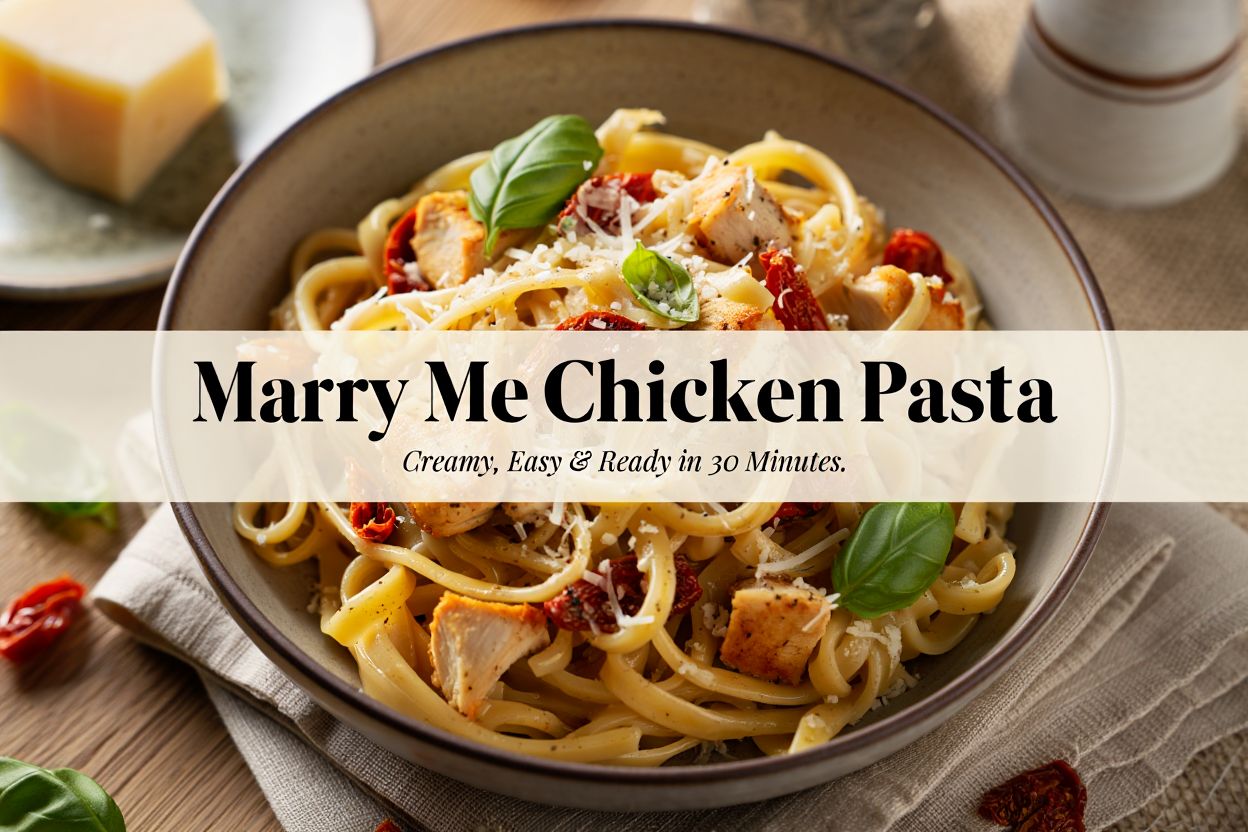
There are “quick dinners,” and then there are this-is-so-good-I’d-commit-to-you-forever dinners. Marry Me Chicken Pasta falls firmly into the second category. If you’ve been on social media lately, you’ve probably seen the original Marry Me Chicken trending seared chicken in a sun-dried tomato cream sauce that’s supposedly so delicious it inspires proposals. This pasta version takes that same magic, tosses it with tender noodles, and delivers a complete one-skillet meal that’s creamy, tangy, savory, and ready faster than takeout delivery.
This recipe is for anyone who wants a restaurant-quality dinner on a Tuesday night without spending an hour at the stove. It’s also for those nights when you need to impress someone a date, your family, or just yourself after a long day but you don’t want a sink full of dishes or a complicated technique. Let’s get into why this works, how to nail it, and all the little tweaks that make it yours.
Why This Recipe Works
Good cooking isn’t about fancy skills; it’s about understanding a few simple principles. Here’s why this pasta comes together so beautifully:
The sun-dried tomato double duty. Sun-dried tomatoes bring intense umami and slight tanginess. But the real secret is the oil they’re packed in. Using that oil to sear the chicken infuses the meat with flavor from the very first step.
Parmesan + pasta water = liquid gold. When you toss hot pasta with grated Parmesan and a splash of starchy pasta water, the cheese melts into a silky emulsion rather than turning grainy. That’s what gives the sauce that velvety, cling-to-each-noodle texture without needing heavy cream by the quart.
One pan, layered flavors. By searing the chicken first, then building the sauce in the same pan, you’re deglazing all those browned bits (fond) left behind. That fond is pure concentrated flavor—don’t wash it away.
30-minute timing works because of smart shortcuts. Using chicken cutlets or thinly sliced breasts means they cook in 4–5 minutes total. The pasta cooks while you make the sauce. Everything finishes together.
Ingredients
Here’s what you’ll need. Nothing obscure most of these are pantry staples or easy to find.
For the chicken:
- 2 boneless, skinless chicken breasts (about 1 to 1.5 lbs) – Slice them horizontally into cutlets for quick cooking.
- 1 teaspoon salt – Enhances flavor and helps browning.
- ½ teaspoon black pepper – Adds gentle heat.
- ½ teaspoon paprika – For color and subtle smokiness.
- 1 tablespoon olive oil – For searing. Use regular, not extra-virgin, which can smoke.
The sauce & pasta:
- 8 oz (about 225g) pasta – Fettuccine, pappardelle, or penne all work. Long noodles catch the sauce well.
- 2 tablespoons sun-dried tomato oil (from the jar) – This is key. If your jar has minimal oil, use 1 tablespoon oil + 1 tablespoon butter.
- 3 cloves garlic, minced – Aromatic backbone.
- ½ cup sun-dried tomatoes, chopped – Packed in oil is best; drain them slightly but keep the oil separate.
- 1 cup heavy cream – Creates richness. Half-and-half works but won’t be as thick.
- ½ cup low-sodium chicken broth – Balances the cream and deglazes the pan.
- ½ cup freshly grated Parmesan cheese – Pre-shredded bags contain anti-caking agents that prevent smooth melting. Grate your own.
- ¼ teaspoon red pepper flakes – Optional, but a little warmth lifts all the creamy notes.
- ¼ cup fresh basil or parsley, chopped – For freshness and color at the end.
Finishing:
- ¼ cup reserved pasta water – Do not skip this. It’s the secret to a non-broken sauce.
Equipment
No special gadgets required.
- Large skillet or sauté pan (12-inch is ideal; non-stick or stainless steel both work)
- Large pot for pasta
- Cutting board and sharp knife
- Wooden spoon or silicone spatula
- Tongs
- Measuring cups and spoons
- Box grater (for the Parmesan)
- Small bowl for reserved pasta water
Step-by-Step Instructions
1. Start the pasta water (minutes 0–2)
Fill your large pot with water and bring it to a rolling boil over high heat. Salt it generously about 1 tablespoon of kosher salt. It should taste like the sea. The salt seasons the pasta from within. Once boiling, add your pasta and cook according to package directions until al dente (firm to the bite).
Time cue: About 10–12 minutes total. Set a timer.
2. Prep and season the chicken (minutes 2–5)
While the water heats, place your chicken breasts on a cutting board. Hold your knife parallel to the board and slice each breast horizontally into two even cutlets. This creates thinner pieces that cook fast and stay juicy. Pat them dry with paper towels wet chicken won’t brown well.
Season both sides evenly with salt, pepper, and paprika.
3. Sear the chicken (minutes 5–10)
Heat your large skillet over medium-high heat. Add 1 tablespoon of olive oil plus 1 tablespoon of the sun-dried tomato oil (or just 2 tablespoons of the tomato oil if your jar has plenty). When the oil shimmers—test by flicking a drop of water; it should sizzle immediately place the chicken cutlets in the pan.
Visual cue: They should sizzle on contact. Don’t crowd the pan; cook in two batches if needed.
Sear for 2–3 minutes per side until golden brown and cooked through (internal temperature reaches 165°F/74°C). Because they’re thin, this happens quickly.
Texture cue: The chicken should feel firm but spring back slightly when pressed.
Transfer chicken to a plate. Don’t clean the pan. Those brown bits are flavor.
4. Build the sauce (minutes 10–13)
Lower the heat to medium. Add the remaining 1 tablespoon of sun-dried tomato oil (or a splash of chicken broth if you’re out). Toss in the minced garlic and chopped sun-dried tomatoes. Cook for 30–60 seconds until the garlic smells fragrant but hasn’t browned.
Smell cue: That warm, nutty, slightly sweet garlic aroma means you’re right on track. Burnt garlic tastes bitter keep moving.
Pour in the chicken broth. Use your wooden spoon to scrape up all those browned bits from the bottom of the pan (this is called deglazing). Let the broth bubble and reduce by half, about 1 minute.
5. Make it creamy (minutes 13–15)
Reduce heat to low. Pour in the heavy cream and add the red pepper flakes (if using). Stir to combine. Let the sauce gently simmer for 2–3 minutes it will thicken slightly. Don’t let it boil hard or the cream may separate.
Visual cue: The sauce should coat the back of your spoon.
6. Melt in the Parmesan (minutes 15–16)
Remove the pan from the heat (this prevents the cheese from seizing). Gradually sprinkle in the grated Parmesan, stirring constantly until it fully melts into the sauce. The residual heat is enough.
Texture cue: The sauce becomes glossy and smooth, not stringy or clumpy.
7. Drain the pasta (minutes 16–17)
By now, your pasta should be done. Scoop out ½ cup of the starchy pasta water and set it aside. Then drain the pasta. Do not rinse it you want that surface starch.
8. Bring it all together (minutes 17–20)
Return the sauce pan to low heat. Add the drained pasta and ¼ cup of the reserved pasta water. Toss everything with tongs until each piece of pasta is coated. The sauce will loosen slightly, then thicken again as it clings to the pasta.
Texture cue: The pasta should glide through the sauce, not sit in a puddle.
9. Finish and serve (minutes 20–25)
Slice the seared chicken into strips or bite-sized pieces. Add it back to the skillet along with any juices from the plate. Gently toss to warm through, about 1 minute.
Garnish with fresh basil or parsley. Serve immediately in warm bowls.
Pro Tips
1. Grate your own Parmesan. Pre-grated cheese contains cellulose and starches that prevent smooth melting. A block of Parmigiano-Reggiano costs more upfront but lasts longer and melts like a dream. Use the fine side of a box grater.
2. Save that pasta water before you drain. I’ve forgotten this more times than I’d like to admit. Set a small bowl in your colander as a reminder. The starch is a natural thickener and helps the sauce cling.
3. Don’t overcook the chicken. Thin cutlets go from perfectly juicy to dry rubber in about 60 seconds. If you’re unsure, use an instant-read thermometer. At 165°F, pull them immediately. They’ll continue cooking slightly from residual heat.
4. Make extra sauce. This pasta drinks sauce. I often increase the cream and broth by 50% (1.5 cups cream, ¾ cup broth) for an extra-luxurious version. You’ll thank me when you reheat leftovers.
5. Toast the sun-dried tomatoes briefly. Let them sizzle in the oil for an extra 30 seconds before adding garlic. This deepens their flavor from sweet and tangy to almost jammy.
Common Mistakes to Avoid
Mistake #1: Using regular dried tomatoes instead of oil-packed. Dried tomatoes are leathery and need rehydrating. Oil-packed sun-dried tomatoes are soft, flavorful, and come with that precious oil. If all you have are dry ones, soak them in hot water for 10 minutes and use butter instead of tomato oil.
Mistake #2: Boiling the cream. High heat makes cream separate into greasy curds. Keep the sauce at a gentle simmer bubbles should be small and lazy, not rolling and violent.
Mistake #3: Rinsing the pasta. This washes away the starch that helps the sauce stick. The only time to rinse pasta is for cold salads. For hot, creamy dishes, never rinse.
Mistake #4: Adding all the pasta water at once. Start with ¼ cup. Toss. If the sauce seems too thick, add another tablespoon at a time. You can always add more, but you can’t take it away.
Mistake #5: Overcrowding the pan when searing chicken. If the pan is crowded, the chicken steams instead of sears. You’ll get pale, rubbery meat without that golden crust. Cook in two batches if needed.
Variations
High-Protein Version
Swap the pasta for chickpea or red lentil pasta (8g more protein per serving). Use half-and-half instead of heavy cream to cut calories, and add a handful of baby spinach to the sauce at the end for extra nutrients without changing the flavor.
Dairy-Free / Vegan
Use full-fat canned coconut milk instead of heavy cream. It will taste slightly coconutty but works beautifully with the sun-dried tomatoes. Substitute nutritional yeast (2 tablespoons) for the Parmesan, and use a plant-based butter or just olive oil. Check that your pasta is egg-free (most dry pastas are).
Lighter Creamy Version
Replace heavy cream with a mixture of ⅔ cup evaporated milk + ⅓ cup low-sodium broth. The sauce will be thinner but still creamy. Add 1 teaspoon of cornstarch mixed with 2 teaspoons of water if you want more body.
Spicy Arrancini Twist
Double the red pepper flakes to ½ teaspoon and add 1 finely chopped Calabrian chili or a teaspoon of harissa paste with the garlic. Top with crispy pancetta bits for a smoky, spicy, savory punch.
Vegetarian
Omit the chicken entirely and add 8 oz of sliced cremini mushrooms. Sear them after the garlic until browned, then proceed with the sauce. The mushrooms add meaty texture and umami.
Storage & Meal Prep
Refrigerator: Store leftovers in an airtight container for up to 3 days. The sauce will thicken as it cools that’s normal.
Reheating (the right way): Never microwave pasta with cream sauce alone; it separates. Instead, reheat gently in a skillet over low heat with a splash of milk, broth, or water. Stir constantly for 3–4 minutes until warmed through and creamy again. If using a microwave, use 50% power in 30-second bursts, stirring between each.
Freezing: I don’t recommend freezing this dish. Cream-based sauces often break and become grainy when thawed. If you must, freeze the chicken and sauce separately from the pasta, then make fresh pasta when you reheat.
Meal prep approach: Cook the chicken, make the sauce (without adding pasta), and store in the fridge. When ready to eat, boil fresh pasta (takes 10 minutes) and combine. This takes less total time than reheating leftovers poorly.
Nutrition Benefits
This is a comfort food recipe, not a health food. But it has some redeeming qualities worth noting.
- Sun-dried tomatoes are concentrated in lycopene (an antioxidant) and vitamin C. They add deep flavor without extra salt or sugar.
- Chicken breast provides lean protein (about 30g per serving) for muscle repair and satiety.
- Parmesan cheese offers calcium and protein with relatively low lactose. A little goes a long way.
- Garlic and red pepper flakes have anti-inflammatory properties and can boost metabolism slightly.
To make it more balanced, serve with a side of roasted broccoli or a simple arugula salad dressed in lemon vinaigrette. The acidity cuts through the cream beautifully.
FAQ
Can I use chicken thighs instead of breasts?
Absolutely. Boneless, skinless thighs are more forgiving and stay juicier if you overcook them slightly. Use the same cutlet technique (slice them in half horizontally) or just pound them to even thickness. Cooking time may increase by 1–2 minutes per side.
What’s the best pasta shape for this sauce?
Fettuccine and pappardelle are classic because the wide noodles catch the creamy sauce. But penne, rigatoni, or fusilli work just as well the ridges and tubes hold sauce inside. Avoid very thin pasta like angel hair; it gets mushy with heavy sauce.
My sauce turned out grainy. What happened?
Two likely culprits: 1) You used pre-shredded Parmesan with anti-caking agents. 2) The heat was too high when you added the cheese. Always remove the pan from heat before adding Parmesan, and stir gently. If it’s already grainy, whisk in a tablespoon of warm water or cream over low heat—sometimes that brings it back.
Can I make this ahead for a dinner party?
Yes, but don’t combine the pasta until you’re ready to serve. Cook the chicken and sauce up to 2 days ahead. Store separately. Thirty minutes before guests arrive, boil fresh pasta, reheat the sauce gently, then toss. The final texture will be perfect.
Is this recipe gluten-free?
Easily. Just use your favorite gluten-free pasta. Brown rice or chickpea pastas work best. Corn-based GF pasta can get gummy, so watch it closely and cook 1 minute less than the package says. Everything else (cream, cheese, sun-dried tomatoes) is naturally gluten-free.
How do I make it less rich / lower calorie?
Use half-and-half instead of heavy cream, reduce Parmesan to ¼ cup, and double the chicken broth to 1 cup. The sauce will be thinner but still flavorful. Also, use 6 oz of pasta instead of 8 oz and add a handful of sautéed zucchini or spinach to bulk up the volume.
Conclusion
Marry Me Chicken Pasta is one of those recipes that feels fancy but fights for its spot in your weeknight rotation because it’s easy. The creamy sun-dried tomato sauce comes together in the time it takes pasta to boil. The chicken stays tender. The whole thing looks like you fussed, but you didn’t. Keep a jar of sun-dried tomatoes in your pantry, and you’re always 30 minutes away from a dinner that makes everyone at the table happy. Try it once, and you’ll see why it earned that name.
One-Pan Lemon Herb Chicken Thighs – A lighter, brighter chicken dinner using similar skillet techniques.
Creamy Garlic Mushroom Pasta (No Cream, Surprisingly Rich) – A dairy-free creamy pasta that uses cashew cream and mushroom umami.