
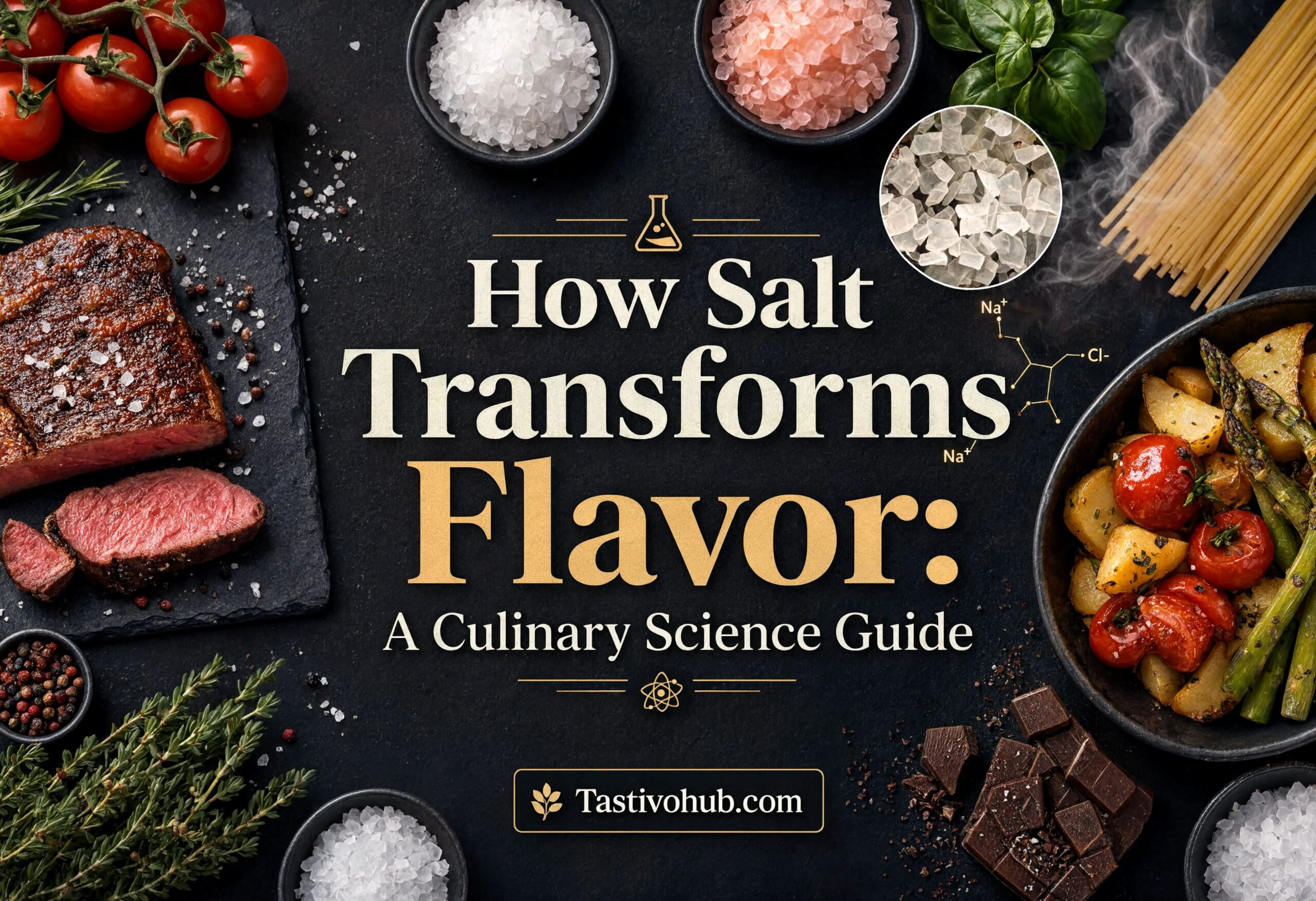
Few kitchen mistakes are more disappointing than spending hours on a dish only to discover it tastes flat, dull, or strangely bitter. I have watched beautifully roasted vegetables seem lifeless, rich soups taste watery, and expensive cuts of meat feel oddly one-dimensional simply because the salt was added incorrectly. Most home cooks think salt only makes food “salty,” but after fifteen years of testing recipes, developing sauces, and troubleshooting restaurant dishes, I can say with confidence that salt is one of the most chemically powerful ingredients in the kitchen. It controls flavor perception, moisture retention, texture development, and even aroma release.
What fascinates me most is how tiny adjustments in salt timing can completely reshape a dish. A steak salted forty minutes before cooking behaves differently than one salted immediately before hitting the pan. Pasta water salted correctly changes the flavor structure of the entire sauce. Even desserts rely on sodium ions to sharpen sweetness and suppress bitterness. In professional kitchens, salt is not treated as seasoning alone; it is treated as a flavor management tool.
By the end of this guide, you will understand exactly how salt interacts with proteins, starches, fats, and taste receptors. You will also learn how professional cooks use timing, concentration, and salt type to build deeper flavor without making food aggressively salty.
The Underlying Science of Salt and Flavor
Salt works because sodium ions directly influence how our taste receptors interpret food. When salt dissolves in moisture, it separates into sodium and chloride ions. Those sodium ions suppress bitterness while enhancing sweetness and savory notes. This is why a pinch of salt makes chocolate taste richer and tomatoes taste sweeter without adding sugar. The effect is neurological as much as culinary; salt changes the way the brain receives flavor signals.
One of the most important scientific effects of salt involves osmosis and diffusion. Osmosis is the movement of water across cell membranes, while diffusion is the movement of molecules from high concentration to low concentration. When salt is applied to meat, vegetables, or pasta water, it initially pulls moisture outward. Given enough time, however, that moisture dissolves the salt and gets reabsorbed into the food. This process seasons ingredients internally instead of leaving flavor only on the surface.
Proteins respond dramatically to salt as well. In meat, salt loosens tightly coiled protein structures like myosin, allowing them to retain more water during cooking. This is why dry-brined chicken or steak stays juicier than unsalted meat. The salt changes the protein network itself, improving moisture retention and tenderness. In sausage making, this same reaction creates the sticky protein matrix responsible for proper texture.
Salt also alters aroma perception. Flavor is heavily dependent on smell, and sodium helps volatile aromatic compounds become more noticeable. Herbs, browned butter, garlic, and roasted spices smell more intense when properly salted because salt amplifies aromatic release. Many cooks think they need more herbs or fat when a dish tastes weak, but often the real issue is insufficient sodium balance.
Starches respond differently but just as importantly. Salted pasta water seasons noodles internally while slightly affecting starch gelatinization, the process where starch granules absorb water and swell during cooking. Bread dough depends on salt for gluten regulation. Without salt, yeast ferments too aggressively, dough becomes sticky, and flavor remains undeveloped. Salt slows fermentation just enough to create stronger structure and more complex flavor compounds.
Acidity and salt also work together chemically. Acid sharpens flavors while salt broadens them. A tomato sauce with acid but no salt tastes harsh; a sauce with salt but no acid tastes heavy. Balanced cooking depends on understanding this interaction rather than relying on either ingredient alone.
Step-by-Step Technique Guide for Using Salt Properly
The first principle I follow in my kitchen is seasoning in layers rather than all at once. Adding a large amount of salt at the end rarely produces balanced flavor because the salt stays concentrated on the surface. Layering salt gradually throughout cooking creates depth and integration. When sautéing onions, for example, I salt early because sodium draws moisture outward, accelerating softening and improving caramelization control. The onions cook more evenly and develop sweeter flavor compounds.
For proteins, timing matters enormously. Large cuts of meat benefit from dry brining, which means salting in advance and allowing time for reabsorption. I typically salt steaks at least forty-five minutes before cooking or leave them uncovered overnight in the refrigerator. During the first stage, moisture appears on the surface. Later, that liquid dissolves the salt and returns into the meat through diffusion. The result is deeper seasoning, stronger browning, and better moisture retention during cooking.
Salt concentration matters just as much as timing. Pasta water should taste noticeably seasoned, though not overwhelmingly salty. Professional cooks often describe it as “sea-like,” but I prefer precision over vague language. Roughly one tablespoon of kosher salt per four liters of water creates properly seasoned pasta without overwhelming the sauce. Because pasta absorbs water while cooking, under-salted water produces bland noodles that cannot be corrected later.
Vegetables require a different strategy depending on water content. High-moisture vegetables like eggplant or zucchini benefit from early salting because it removes excess water and concentrates flavor. Delicate vegetables such as peas or green beans are often better salted after cooking to preserve fresh texture and color. Timing changes structural behavior as much as flavor.
Salt grain size also affects performance. Kosher salt disperses evenly and provides better tactile control during seasoning. Fine table salt dissolves quickly but can create uneven salinity if measured improperly. Flaky finishing salts are best used after cooking because their large crystals create bursts of texture and concentrated flavor on the palate.
Temperature influences salt perception as well. Cold foods require slightly more salt because lower temperatures suppress flavor intensity. This is why chilled pasta salad or potato salad often tastes dull straight from the refrigerator. I usually season cold dishes more aggressively than hot dishes, then allow them to rest briefly before final tasting.
The most important professional habit is constant tasting. Salt perception changes as liquids reduce, starches absorb moisture, and fats emulsify. A soup that tastes balanced after twenty minutes may become over-salted after another hour of simmering. Experienced cooks continuously adjust rather than seasoning only once.
Comprehensive Troubleshooting Section
One of the most common salting problems is uneven seasoning. This happens when salt is added too late or not distributed properly. You may notice random bites that taste intensely salty while the rest remains bland. To fix this, dilute strategically rather than simply adding more ingredients blindly. A splash of unsalted stock, cream, or water can redistribute sodium concentration. Stir thoroughly and allow several minutes before tasting again because salt needs time to dissolve evenly.
Over-salted soups and sauces are usually the result of reduction. As water evaporates, salt concentration increases dramatically. I often see home cooks season aggressively early in the simmering process without accounting for evaporation. The best rescue strategy is controlled dilution paired with flavor rebuilding. Add unsalted liquid first, then rebalance acidity and aromatics afterward because dilution weakens the entire flavor structure, not just the saltiness.
Dry meat despite proper salting usually points to timing errors or heat management problems. If salt is applied immediately before cooking, moisture gets pulled to the surface but does not have time to reabsorb. That surface moisture evaporates in the pan, increasing dryness and weakening browning. Allowing enough resting time after salting solves most of these issues.
Bitterness can also signal poor salt balance. Dark leafy greens, coffee-based desserts, cocoa, and charred vegetables naturally contain bitter compounds. Proper salting suppresses bitterness, but under-seasoned food exaggerates it. If a dish tastes unpleasantly sharp or bitter, the answer is often a small addition of salt rather than sugar.
Another common mistake is relying exclusively on finishing salt. Surface seasoning creates immediate impact but lacks depth. Food may taste salty at first bite yet bland internally. Internal seasoning through layered cooking produces fuller flavor integration.
Texture problems can occur from excessive salting as well. Salt draws water from vegetables and proteins aggressively over time. Cucumbers become watery, mushrooms collapse, and fish can cure unintentionally if salted too early. Matching timing to ingredient structure is critical for maintaining ideal texture.
Frequently Asked Questions
Why does restaurant food taste more flavorful even when it is not extremely salty?
Restaurants typically season in layers throughout the cooking process rather than adding salt only at the end. Professional kitchens also understand how salt interacts with fat, acid, and heat. Proper seasoning amplifies aromas and suppresses bitterness, making dishes taste richer without necessarily containing dramatically more sodium.
Is kosher salt better than table salt?
Kosher salt is not chemically superior, but its crystal structure gives cooks better control. The larger flakes distribute more evenly and are easier to pinch accurately during cooking. Table salt is denser and dissolves faster, which means small measuring errors can produce excessive salinity. When substituting between salts, volume measurements should always be adjusted.
Why does salting meat ahead of time improve browning?
When salt has enough time to reabsorb into the meat, the surface becomes drier before cooking. Dry surfaces brown more efficiently because moisture inhibits the Maillard reaction, the chemical process responsible for deep roasted flavor and crust formation. Proper dry brining improves both flavor penetration and surface caramelization.
Can salt actually make sweet foods taste sweeter?
Yes. Sodium suppresses bitterness while enhancing our perception of sweetness and aromatic complexity. This is why salted caramel, chocolate chip cookies, and fruit desserts taste more balanced with a small amount of salt. The goal is not obvious saltiness but flavor amplification through contrast and sensory balance.
For more authentic articles tastivohub.com