
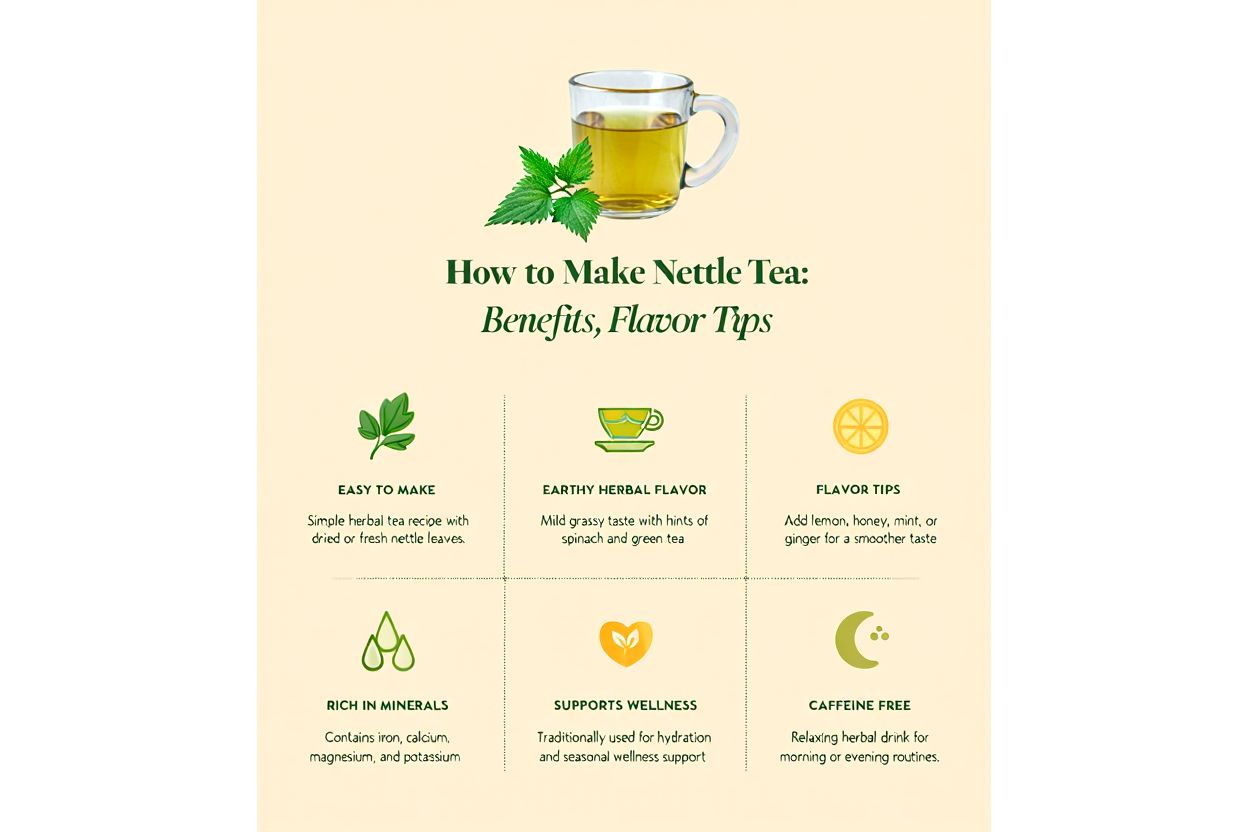
If you’ve ever brushed against a stinging nettle plant, you know it’s no joke. That sharp, tingling burn stays with you. So it sounds almost absurd that the same plant makes one of the most mineral-rich, earthy, and unexpectedly delicious teas you can brew at home for free (or very cheap).
But here’s the catch: once you cook or dry nettles, that sting completely disappears. What’s left is a deep, grassy, slightly spinach-like tea that’s been used for centuries across Europe and North America.
This article isn’t a hype-filled health listicle. It’s a practical guide: how to harvest (or buy) nettles safely, brew a cup that actually tastes good, store it properly, and understand what the research and tradition say about its benefits.
Who is this for?
Anyone who wants a caffeine-free herbal tea, foragers on a budget, gardeners looking to use “weeds,” or people curious about natural mineral sources without swallowing pills.
Why This Recipe Works (The Simple Logic)
Most people ruin nettle tea in two ways: they boil it too aggressively (bitter, astringent) or they use too little plant material (weak, like hot plant water). This recipe works because it balances three things:
- Heat control – Simmering, not a rolling boil, extracts minerals and flavor without pulling harsh tannins.
- Steeping time – 10–15 minutes is the sweet spot. Less than that = weak. More than 20 minutes = bitter.
- A flavor bridge – Nettle tastes “green” and mineral-forward. A tiny pinch of salt (yes, salt) or a squeeze of lemon rounds off the edge and makes it drinkable daily.
Unlike black or green tea, nettle has no caffeine. So it won’t keep you up, and you can drink it cold or hot.
Ingredients
This is a single serving (12 oz / 350 ml). Scale up as needed.
- 1 tablespoon dried nettle leaves (or 2–3 tablespoons fresh, tightly packed)
Why: Dried is more concentrated and easier to store. Fresh has a brighter, grassier taste but requires more volume because of water content. - 12 oz water (filtered if possible – tap chlorine can flatten herbal flavors)
- Pinch of sea salt (optional but recommended)
Why: Salt suppresses bitterness and enhances the natural umami of nettle. Think of it like salting vegetable broth. - Lemon wedge or honey (optional)
Why: Lemon brightens the earthy notes. Honey adds sweetness if you find the tea too “meadow-like.”
Note on safety: Only harvest nettles away from roads, sprayed fields, or dog-walking paths. If buying, look for organic cut-and-sifted nettle leaf (not root – leaf is for tea).
Equipment
You don’t need anything fancy.
- Small saucepan (non-reactive – stainless steel or enamel works best; avoid aluminum)
- Fine-mesh strainer or tea infuser (if using loose dried leaf)
- Mug or heatproof glass
- Tongs or a fork (to remove fresh leaves if you didn’t use an infuser)
- Gloves (if harvesting fresh nettles – trust me)
That’s it. No teapot required, though you can use one.
Step-by-Step Instructions
1. Prepare the nettles
If using dried: Measure 1 tablespoon per cup. No rinsing needed.
If using fresh: Wear gloves. Rinse the leaves under cool water to remove dirt or bugs. Pat dry. Remove thick stems (they’re fibrous and bitter). Tear larger leaves into pieces.
Visual cue: Fresh nettle leaves are bright green with tiny hairs. After washing, they still look “fuzzy” – that’s the sting. Don’t touch with bare skin.
2. Heat the water
Pour 12 oz water into the saucepan. Bring it to a gentle simmer over medium heat. You should see small bubbles rising to the surface, not a violent rolling boil.
Time cue: About 3–5 minutes depending on your stove.
Texture cue: Water at a gentle simmer feels hot but not explosive. If you see steam dancing and tiny pearl-like bubbles, you’re perfect.
3. Add the nettles
Turn off the heat first. Then add the nettles directly into the hot water. Stir once to submerge them.
Why turn off the heat? Because keeping the water at a simmer after adding the leaves can overcook them, creating a muddy flavor. Off-heat steeping is more forgiving.
4. Steep covered
Cover the saucepan with a lid. Let it steep for 10 minutes for dried leaves, or 12–15 minutes for fresh.
Visual cue: The water will turn pale green to light brownish-green, like the color of a shallow forest stream. Dried leaves will unfurl slightly.
5. Strain and season
Pour the tea through a fine-mesh strainer into your mug. Press the leaves gently with the back of a spoon to release liquid – but don’t squeeze hard (that releases bitterness).
Add a tiny pinch of salt (about 1/16 teaspoon). Stir. Taste.
If you want lemon or honey, add them now. Lemon first, then honey – acid helps honey dissolve.
6. Drink and observe
Nettle tea tastes best warm, not scalding. Let it cool 2–3 minutes. The mouthfeel is smooth, slightly drying (like a gentle red wine tannin), with a finish that reminds me of mild green tea mixed with kale broth.
Pro Tips (From Real Kitchen Embarrassments)
- Don’t use boiling water directly on dried nettle. It shocks the leaves and traps bitterness. Off-heat simmered water is the move.
- Save the spent leaves for smoothies. After straining, those softened nettle leaves are completely de-stung. Blend them into a banana-spinach smoothie for extra fiber and minerals. Zero waste.
- Make a concentrated batch for iced tea. Double the nettles (2 tablespoons dried per cup), steep 15 minutes, strain, chill. Dilute with cold water or sparkling water 1:1. Add mint and cucumber slices.
- If your tea tastes metallic or muddy – check your water. Hard tap water or chlorinated water ruins delicate herbal teas. Try bottled spring water once to test.
- Fresh nettle tea has a “raw” edge that some people love. If it’s too intense, dry your own nettles in a low oven (170°F / 75°C for 2–3 hours) and use them the next day. Drying mellows the flavor significantly.
Common Mistakes to Avoid
| Mistake | Why It Happens | Fix |
|---|---|---|
| Tea tastes like dirt | You used too much leaf or steeped too long (over 20 min) | Stick to 1 tbsp dried / 10 min steep |
| No flavor at all | Water wasn’t hot enough, or you didn’t cover the steep | Always steep covered. Water should be steaming (200°F / 93°C) |
| Stinging sensation in throat | You used fresh nettles without heat; raw hairs remain | Fresh nettles must hit hot water above 160°F (71°C) to denature the sting |
| Cloudy, murky tea | You squeezed the leaves aggressively while straining | Gentle press only. Or just let it drip naturally |
| Bitter aftertaste | You boiled the leaves, not simmered off-heat | Never boil leaves. Heat off → add nettles → cover |
Variations (Keep It Interesting)
1. Nettle-Mint Iced Tea (Summer Refresher)
Add 5 fresh mint leaves (or 1 teaspoon dried peppermint) to the saucepan with the nettles. Steep as directed. Chill for 2 hours. Serve over ice with a lemon slice. Mint brightens the earthiness dramatically.
2. Golden Nettle Tea (Anti-Inflammatory Twist)
After straining the nettles, stir in ¼ teaspoon turmeric powder, a pinch of black pepper, and a teaspoon of coconut oil or honey. Turmeric needs fat and pepper for absorption – the oil helps. Tastes like a savory golden latte.
3. Nettle Broth Base (Savory, Not Sweet)
Double the water (24 oz) and use 2 tablespoons dried nettle. Add a bay leaf, 3 black peppercorns, and a small garlic clove (smashed). Simmer (low heat, covered) for 15 minutes. Strain. Use this as a sipping broth or a base for light soups. No salt until the end.
Storage & Meal Prep
How to store dried nettle leaves: Keep in an airtight glass jar away from sunlight and heat. They last 12–18 months. After that, they lose color and flavor but remain safe.
Make-ahead tea: Brew a large batch (4 cups) and refrigerate in a sealed pitcher for up to 5 days. The flavor deepens after day 2 – some prefer it. If it smells vegetal or turns dark brown-black, discard.
Freezing fresh nettles for later: Wear gloves. Blanch fresh leaves in boiling water for 30 seconds, drain, squeeze, freeze in a zip bag. Use frozen leaves directly in tea (add 2 extra minutes to steep time). This kills the sting immediately.
Do not reheat nettle tea in a microwave – it creates uneven hot spots and can make it taste flat. Reheat gently on the stovetop until steaming, or drink it cold.
Nutrition Benefits (What’s Actually in the Cup)
Let’s be clear: I’m not a doctor, and this isn’t medical advice. But nettle tea has a long traditional use and some interesting nutritional data (USDA database and peer-reviewed studies in Journal of Herbal Medicine).
Nettle leaf is rich in:
- Vitamin K (one cup provides over 500% of daily value – important for blood clotting, so talk to a doctor if you’re on blood thinners)
- Iron (especially relevant for plant-based eaters; pairing with vitamin C from lemon increases absorption)
- Calcium and Magnesium (bone health, muscle function)
- Silica (hair, skin, nails – traditional use, limited modern studies)
- Flavonoids (antioxidant compounds that reduce oxidative stress)
The tea is very low in calories (under 5 per cup) and caffeine-free.
What it won’t do: Cure allergies instantly, replace a balanced diet, or detox your liver (your liver does that itself). Anyone promising miracles is selling something.
FAQ
1. Can I drink nettle tea every day?
Yes, most people can. Traditional use suggests 1–3 cups daily. But because of high vitamin K content, if you take warfarin (Coumadin) or other blood thinners, check with your doctor first. Also, pregnant individuals should consult a healthcare provider – not enough safety data.
2. Does nettle tea really help with seasonal allergies?
Some small studies suggest freeze-dried nettle capsules may reduce sneezing and itching, but tea is weaker than capsules. That said, many longtime drinkers report milder symptoms after 4–6 weeks of daily tea. Expect gentle support, not a replacement for antihistamines.
3. Why does my nettle tea turn brown after a day in the fridge?
That’s oxidation – same reason sliced apples turn brown. It’s safe to drink for 3–5 days, but the flavor changes from “fresh grass” to “hay and earth.” Some people prefer it that way for iced tea. If it smells sour or vinegary, toss it.
4. Can I use stinging nettle root instead of leaves?
No – not for tea. Nettle root is woody, bitter, and used differently (often for men’s urinary health in tinctures or capsules). Stick to leaf for tea. The package should say “Urtica dioica leaf.”
5. My fresh nettle tea still stings my mouth – what happened?
Two possibilities: (1) You didn’t heat the water enough before adding leaves. The sting denatures at around 160°F (71°C). If your water was only hot to the touch (120°F), it won’t work. (2) You touched raw leaves with bare hands, then touched the tea after brewing. The sting is mechanical, not chemical – tiny hairs can break off. Use gloves until leaves hit hot water.
Conclusion
Nettle tea isn’t glamorous. It won’t go viral on TikTok. But it’s one of those quiet, useful kitchen skills that pays off every time you brew a cup – especially in winter when fresh greens are expensive, or in summer when you want a caffeine-free iced tea that actually feels nourishing.
Start with the basic recipe. Taste it plain first. Then add the pinch of salt. Notice the difference. Once you understand that earthy baseline, try the variations, make a big batch for the fridge, or harvest your own if you’re brave enough to wear gloves in the backyard.
And if you end up liking it more than your usual chamomile or peppermint? Welcome to the quiet club of nettle drinkers. We meet at the stove, wearing kitchen gloves, laughing at the plant that tried to sting us first.
Caramel Apple Crisp Matcha Latte (combine nettle with chamomile, lemon balm, or lavender)
How to Make Dandelion Recipes (another “weed” tea with roasted, coffee-like flavor)
DIY Mineral-Rich Soup Broth from Kitchen Scraps (uses the same simmering logic as nettle broth)